| Degrees |
|
|---|---|
| Duration |
| Start date | September, January or April |
|---|---|
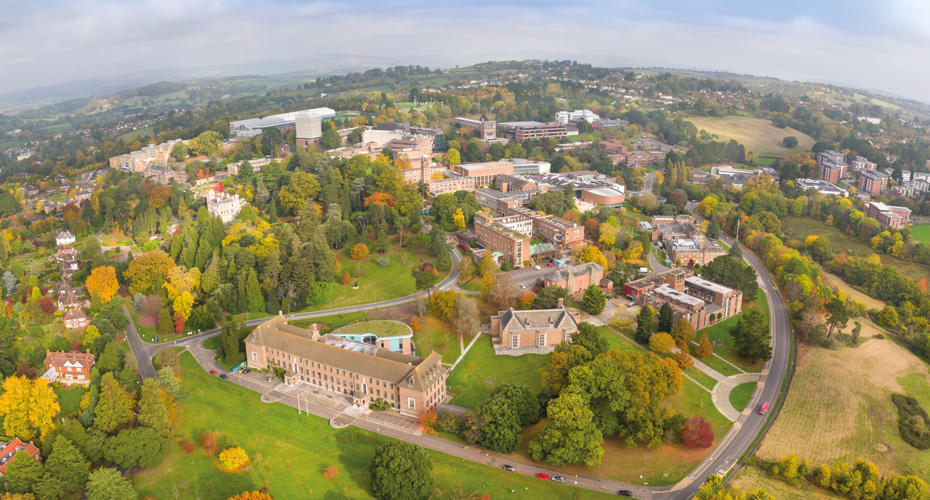
| Locations | Streatham Campus
Penryn Campus |
| Study modes | Full time or part time |
Overview
All research students join one of the following research groups, and those associated with the two materials themes may be allocated a studentship as part of the Doctoral Training at the Centre for Metamaterial Research and Innovation.
Contact
Web: Enquire online
Phone: 0300 555 6060 (UK)
+44 (0)1392 723044 (non-UK)
Study alongside our leading research groups specialising in Astrophysics, Biomedical physics, Quantum systems and Nanomaterials, and Electromagnetic and Acoustic materials
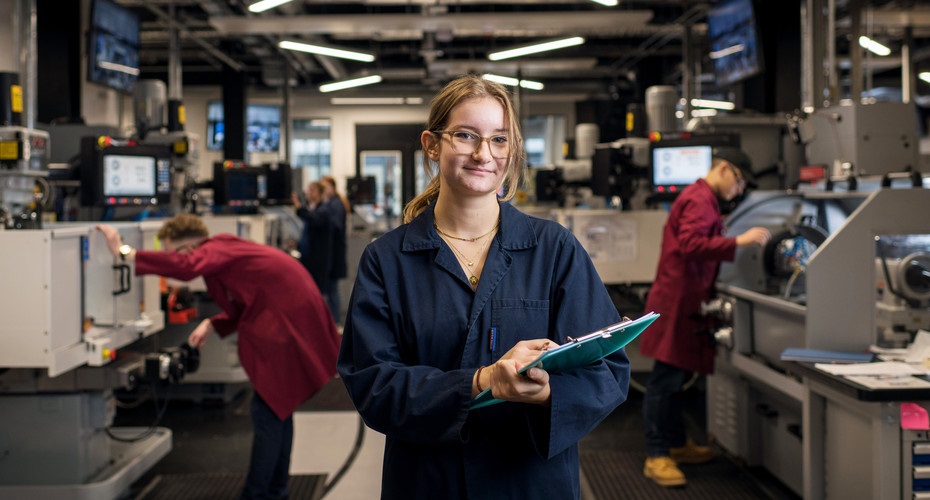
Extensive facilities in our dedicated building including clean-rooms, helium liquefier, water tanks, amplified ultra-fast laser systems, imaging suite, observatory and computer labs
Research overview
One of the largest star formation groups in the UK with a wide variety of observational and theoretical programmes. Our main research themes cover:
Actively involved in the complementary fields of Biophysics and Medical Physics. Our research falls under a number of headings:
We explore the interaction of matter with electromagnetic radiation (from x-ray to microwave), sound and fluids. We investigate how this interaction can be manipulated, using materials structured from the nm to the cm scale ("metamaterials"), to provide novel and improved materials and devices.
Our experimental work involves material synthesis and nanofabrication, and imaging and characterisation using microwave, ultrafast laser, sound and synchrotron sources. In parallel, we use numerical and analytical quantum theory, spatial transformation methods, and micromagnetic theory.
Visit Electromagnetic and Acoustic Materials (EMAG) pages >>
The Quantum Systems and Nanomaterials Group studies the physical properties of systems at the nanoscale. At this scale, classical and quantum physics combine to create an exotic world that we explore both experimentally and theoretically using a range of advanced techniques.
We investivate the optical, electrical, thermal and mechanical properties of scientifically and industrially important materials. Materials studied include graphene, carbon nanotubes, semiconductor quantum dots and superlattices, topological insulators and dichalcogenides. We aim to understand these systems at the deepest possible level, to not only establish the underlying physics but also the potential for industrial applications.
The Theoretical Physics group’s interest lies in advancing our understanding of fundamental physics phenomena, and using this knowledge to predict and describe new experiments and applications.
Our research ranges from classical wave theory to quantum information theory, to condensed matter physics and nano physics. For example, we investigate the electromechanical properties of nanoscale materials such as graphene, the spin dynamics of magnetic materials at ultrafast timescales, the light-matter interactions between light and metamaterials, and the occurrence of Hawking radiation in laboratory systems.
To tackle these topics we use analytical and numerical methods including classical wave theory, quantum optics, density functional theory (DFT), micromagnetics and magnonics, and exactly solvable models.
Physics at the University of Exeter is exemplified by our world-leading academic staff. Our academic team have an outstanding breadth of knowledge, passion and energy across a wide range of research interests, from quantum behaviour in nanomaterials, the formation of stars and the age of the universe to biomedical physics, photonics and astrophysics. that will support you throughout your research. You will develop a strong personal relationship with your supervisor and tutor which will support you to achieve your ambitions.
Our academic team are enthusiastic about sharing their expertise and knowledge with the next generation of physicists, and are on hand to assist you in your innovative research projects. As well as dedicated contact hours with your supervisor and tutor, our team operate an open door policy which allows you to raise questions and issues as they arise. This collaborative approach allows you to flourish by creating a supportive, cooperative environment in which to excel in your research.
How to apply
Most students studying for a PhD at Exeter are funded by research grants or industry sponsors, though we are also happy to consider applications by "self-funded" students (including those supported by external scholarships) as well.
You have 4 options to apply for a PhD project:
1. You can apply directly for a specific project listed in our directly funded projects list. Please note the individual deadlines for each project within the project descriptions.
2. You can apply for one of the studentships funded through the EPSRC DTP programme. In order to do so, you will need to submit a research proposal.
3. If you are interested in Astrophysics, please view current Astrophysics PhD opportunities.
4. If you have your own funding, you may also apply for admission to postgraduate degrees. When you apply, you must indicate potential supervisors and upload a description of the research you hope to carry out during your PhD/MbyRes/Mphil. We recommend that you contact potential supervisors to discuss your plans before submitting an application."
Requirements for international students
If you are an international student, please visit our international equivalency pages to enable you to see if your existing academic qualifications meet our entry requirements.
English language requirements
International students need to show they have the required level of English language to study this course. The required test scores for this course fall under Profile A: view the required test scores and equivalencies from your country.
PhD and Research Programme application process
The information below applies to self-funded PhD, MPhil and Masters by Research applicants, but if you are applying for a funded PhD studentship, please follow the specific instructions related to that application.
- Pinpoint your PhD research area
- Investigate whether this area is available at Exeter
- Ensure that you meet our English language entry requirements (international students only)
- Construct and refine your PhD research proposal
- Approach your potential supervisor(s)
- Apply online
PhD studentships pages can be accessed in our Funding lists on Finance tabs under each research topic page, and are also available from the Postgraduate Research search results pages on this site, on the PhD projects tab.
Full details of the application process can be found on our Apply now webpage.
Fees and funding
Tuition Fees per year 2024/25
- Home: £4,900 full-time; £pro-rata part time
- International: £28,500 full-time
For those studying for more than one year, our fees are expected to increase modestly in line with Consumer Price Inflation measured in December each year. More information can be found on our Student Finance webpages.
Tuition fees per year 2023/24
- Home: £4,712 full-time; £pro-rata part-time
- International: £26,500 full-time
For those studying for more than one year, our fees are expected to increase modestly in line with Consumer Price Inflation measured in December each year. More information can be found on our Student Finance webpages.
Our Postgraduate Funding webpage provides links to further information. If you are considering a PhD in the future, in addition to University of Exeter funding, we have been successful at securing postgraduate funding for PhD research through our Funded centres.
Current available funding
Supervision
Being part of a collaborative research community is the ideal environment for you to flourish. We encourage our students to engage with each other, as well as our world-class academics, to promote a vibrant, supportive and friendly research atmosphere.
The group structure provides a very positive support mechanism, helping research students to sustain productive research; over 90 per cent submit within the EPSRC deadline period, with most publishing several scientific papers during their period of study.
We understand that it is vital that you are a part of a stimulating and energetic environment with your peers throughout your research degree. We also recognise that being in a position to discuss stages of your work is essential to your long-term success. To support this, we organise a series of postgraduate seminars where research students discuss their work, carry out presentations and swap ideas. We strive to ensure that you are a valued and intrinsic member of a close-knit group of ambitious research students, who will cooperate and provide support to each other when necessary.
All postgraduate research students are allocated a second supervisor and/or mentor to guide you throughout your postgraduate degree and we deliberately create a policy of openness and approachability. You will undertake a full programme of induction and training in order to
- provide the technical, mathematical, organisational and personal skills required for your research;
- heighten your awareness of recent advances in physics and astronomy research, through the Colloquium Programme;
- provide you with essential safety, and fire training;
- introduce you to the facilities, support and monitoring services provided by Physics and Astronomy and throughout the Faculty.
You will only be able to pursue a research degree with us if we can offer appropriate supervision. Your supervisors will provide the necessary support and guidance and so need to have expertise in your chosen research field. You may join a research team or work with specific members of staff.
We strongly recommend that you informally approach your potential supervisor(s) with your research proposal before submitting a formal application to study. This will enable you to find out if they feel they would be able to supervise you and whether they believe your research proposal needs further refinement.
Visit our how to apply page for detailed information on the application process.
Facilities
The Faculty of Environment, Science and Economy has excellent teaching and research resources and has recently invested £2.8 million to provide new academic and social facilities. You will have access to our fully-equipped research centres, comprehensive laboratories and workshops and computer facilities including wireless networking in most areas.
The excellent computing facilities are based around a Unix/Linux system networked to the University computer system. We have our own supercomputing facility built around a Beowulf cluster which is used, for example, by students modelling astrophysical and geophysical fluid flows. The faculty has a brand new study area with core texts for courses, individual rooms for study groups to meet, and wireless connection for laptops and LCD TVs to display presentations.
The working environment for postgraduate students is friendly and welcoming: each research student has a desk in a shared or open plan office equipped with a networked computer terminal. We provide training in research methodology and in relevant computer software, bibliographical resourcing and mathematical word-processing. You will have access to state-of-the art facilities for remote collaboration and advanced PhD training via the APTS and MAGIC consortia.
Careers
We have an excellent reputation with graduate recruiters and our students compete very successfully in the employment market. In addition to Employability Officers, Career Zone gives access to a wealth of business contacts, support and training as well as the opportunity to meet potential employers at our regular Careers Fairs.
Postgraduate research students can access our Postgraduate Researcher Development Programme, which covers a range of topics to help you complete a successful research degree and acts as a springboard for your research career.
Graduate destinations
Below are some examples of initial employment titles and employers of Physics postgraduates who have studied with us in recent years.
Please note that, due to data protection, the job titles and organisations are listed independently and do not necessarily correspond.
| Job Title | Organisation |
|---|---|
| Applied scientist/engineer Associate Research Fellow Associate Research Fellow in Microwave Metamaterials Billing Analyst Climate Services Consultant Content Scientist Data Scientist Design engineer General Surgeon Graphene-based nano-electromechanical systems Head of Analytics Lab Assistant Lecturer Lecturer in Medical Imaging Meteorologist NASA Postdoctoral Fellowship Operational Researcher Patent Examiner Post Doctoral Researcher Post-Doctoral Contract Post-doctoral Physicist Post-doctoral Research Assistance Postdoctoral Research Scientist Postdoctoral researcher Project Assistant R & D engineers Radar Scientist Radiotherapy Physicist Research and Development Engineer Research Assistant Research Engineer Research Fellow Research Scientist Research Technician/Fellow Scientist Secondary School Teacher Senior Design Engineer Senior Electromagnetics Engineer Service Delivery Graduate Super User Teacher of science Test and Installation Engineer for XPS Systems |
Aix Marseilles University Arizona State University Aviva BAE Systems Bristol Royal Infirmary CASA, University of Colorado at Boulder Civil Service Columbia University in the City of New York DSTL Dynamon Hokkaido University Imperial College London Institute of Astrophysics Paris Institute of Photonics, Vienna University of Technology Institute of Physics, Chinese academy of Sciences Intellectual Property Office Lipson Community College Met Office Ministry of Defence NASA Okinawa Institute of Science and Technology QinetiQ QinetiQ Group plc Radboud University Renishaw RWTH Aachen University Sharp Laboratories of Europe Limited The University of Sheffield University College Cork University College London University of Cambridge University of Exeter University of Sheffield University of Surrey |
Studying at Exeter is great, the campus is so central, the sports facilities are excellent and the student satisfaction in Physics is incredibly high. There’s really good lecturers and fantastic tutors, who help you through your work each week.
It never feels like you’re alone as there’s such a good support system here. Also, you’re so close to the beach which is great!
My PhD has been challenging, but I had a lot of support from my supervisor. My funding allowed me to go to a lot of national and international meetings and conferences. I’ve learned some skills that I’ll use for the rest of my life, whether it be in academia or if I go into data science, the skills I’ve learned are heavily sought after in both industries.
My advice to future students would be, do not be afraid to sign up to something that’s going to be four years long, see it as investing time in your future. In the long run it’s worth it and the skills you learn will help you in your career path.
Lewis
PhD Physics, 2018